
Solar & Off-Grid Power
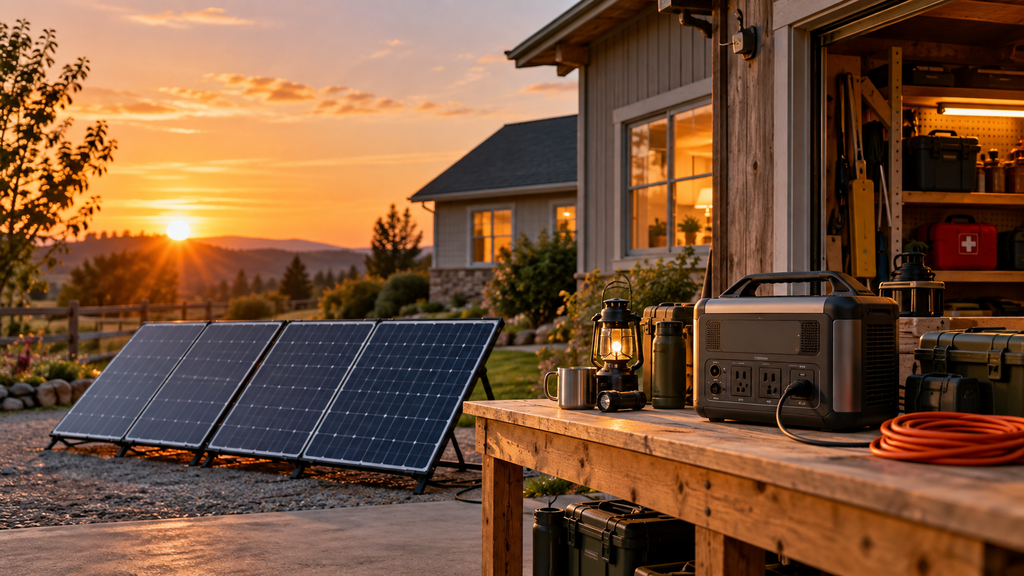
When the grid flickers, fails, or gets throttled, everything else you prepared for gets harder. Food in the freezer. Water pumps. Radios. Phones. Lights so you are not stumbling in the dark. Medical devices that cannot wait for the utility company. Power is not optional preparedness — it is the layer that keeps the rest of your plan working.
This page is a practical how-to for building usable off-grid power. No affiliate lists. No fantasy kilowatts. Just the pieces that matter and how they fit together.
Related: Radios, Antennas, How To’s, and the Be Ready hub.
—
Why Power Matters When the Grid Is Unreliable
Storms, wildfires, overloaded transformers, cyber attacks on infrastructure, and deliberate outages are all real. In many areas, multi-day blackouts are no longer theoretical. If your communications plan depends on a radio, that radio needs juice. If your fridge holds insulin or a week of food, you need a plan before the freezer turns into a science experiment.
The goal is simple: keep critical loads alive long enough to ride out the event — or to move if you have to. Solar and stored battery power do that quietly, without a fuel run every few hours. Generators still have a place. They are backup to the backup, not the whole plan.
—
What You Actually Need (Sizing Mindset)
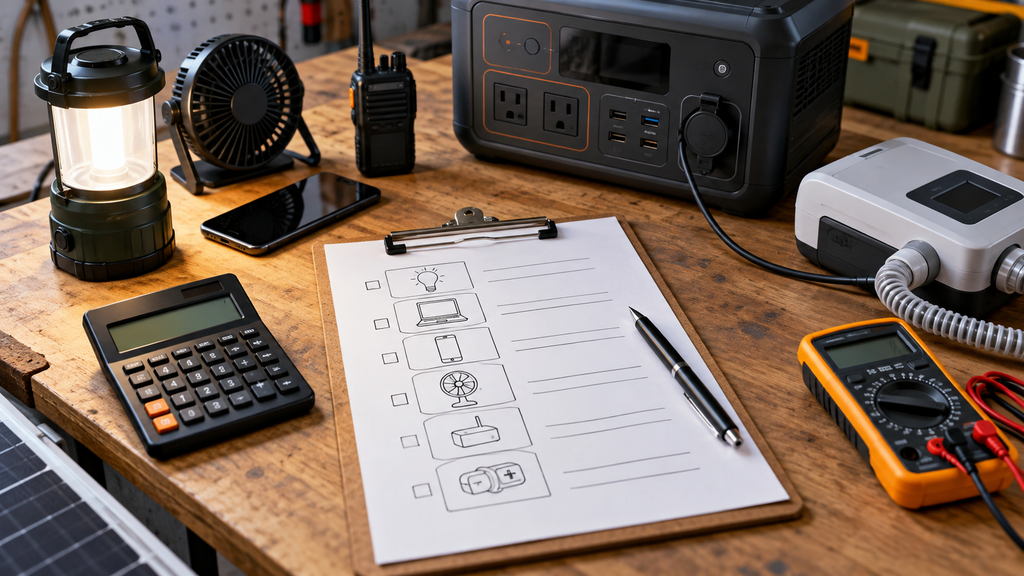
Start with **loads**, not with shopping. Write down what must stay on, for how long, and at what power draw.
Typical preparedness loads:
– **Lights** — LED bulbs and headlamps sip power. A few watts each.
– **Phones and radios** — Charging and transmit. Radios matter more when you transmit; receive draws less.
– **Fridge / freezer** — High draw when the compressor runs. Often the biggest continuous household load people try to save.
– **Medical devices** — CPAP, nebulizers, oxygen concentrators, refrigerated meds. Know the wattage and the hours per day. Do not guess.
– **Water** — Well pumps and pressure systems can be surge monsters. Plan carefully or store water so you are not depending on the pump every hour.
– **Fans / small tools** — Nice to have; size them after the must-haves.
Rough math that keeps you honest:
1. List each device in **watts** (or amps × volts).
2. Multiply by **hours per day** you will actually use it → **watt-hours (Wh)** per day.
3. Add a margin. Batteries age. Panels get dirty. Weather is not a brochure.
A portable station advertised as “1500W” is talking about inverter output (how hard it can push), not how long it can run. The number that tells you runtime is **watt-hours** (or amp-hours at a known voltage). Marketing loves the first number. Prepared people live by the second.
—
Portable Power Stations
These are battery + inverter + charge inputs in one box. Good entry point for apartments, bug-out kits, and learning your real daily Wh use.
**What to look for:**
– **Wh rating** you believe — Prefer clear watt-hour specs over vague “hours of runtime.”
– **Pure sine inverter** — Safer for sensitive electronics and many medical devices.
– **Input options** — AC wall charge, solar (Anderson / XT60 / proprietary), and ideally 12V car charge.
– **Pass-through charging** — Can you run loads while solar is topping it up? Useful in multi-day outages.
– **Weight and noise** — Fan noise and bulk matter if you will move it.
**Realism check:** A 500 Wh unit might run LED lights and phone charging for a day or two. It will not run a full-size fridge for long. A 1000–2000 Wh class unit is more useful for mixed light loads. Match the station to the load list you wrote down, then size solar so you can refill what you burn each day when the sun cooperates.
—
Solar Panels
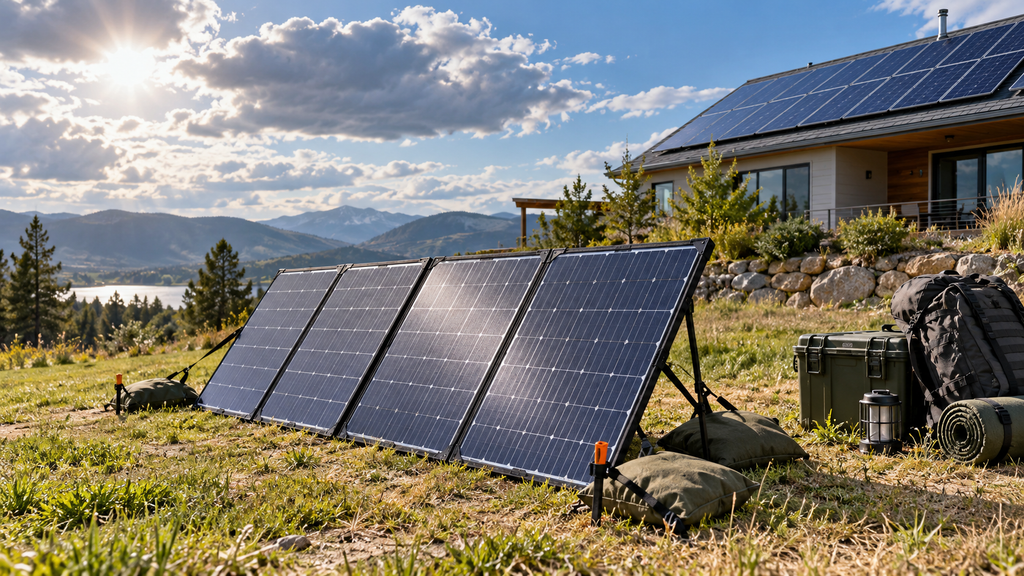
Panels make electricity when light hits them. Clouds, shade, angle, and dirt all cut output. Plan for less than the sticker rating.
### Folding vs Fixed
– **Folding / portable panels** — Deploy when you need them. Good for bug-out, balconies, temporary setups. Lower continuous output than a permanent roof array of the same nameplate watts, and you have to set them up.
– **Fixed panels** — Roof, ground mount, or pole. More set-and-forget for a homestead or retreat. Needs secure mounting, proper wiring, and weather sense.
### Watts and Placement
Panel wattage is a lab rating. In the field, expect less. Face panels toward the sun; avoid shade from trees, antennas, and vehicles. Elevate if snow or leaves bury them. Keep connectors dry and strain-relieved.
### Weather
Rain is fine for most outdoor-rated panels; standing water on connectors is not. Wind can flip lightweight folding kits — stake or weight them. Heat reduces output; cold can help voltage but freeze your fingers while you are adjusting stands. Have a way to secure and disconnect in a storm.
—
## Charge Controllers (PWM vs MPPT Basics)
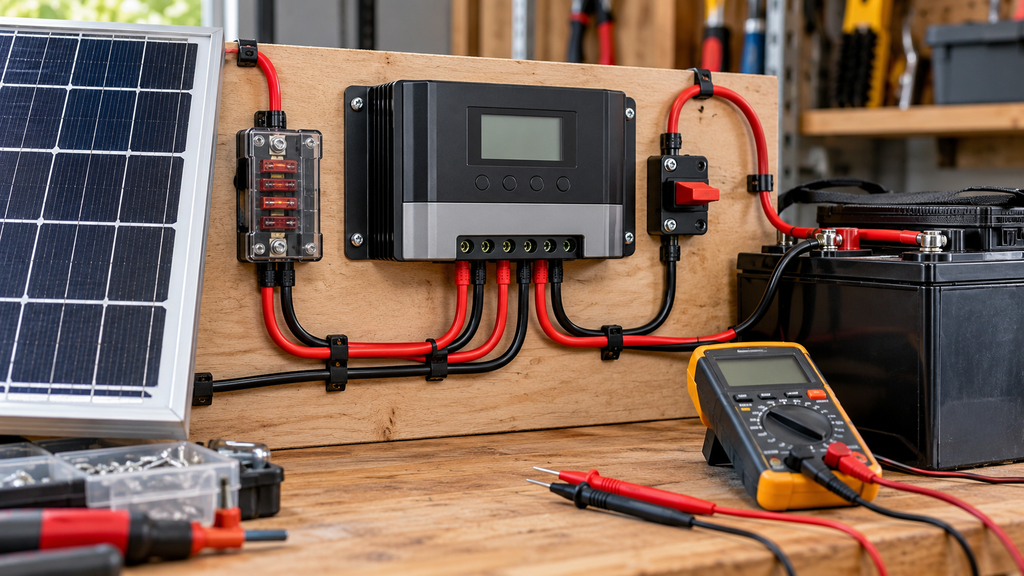
A charge controller sits between panels and battery (or is built into a power station). It prevents overcharge and manages how hard the panels push the bank.
– **PWM (Pulse Width Modulation)** — Simpler and cheaper. Works, but wastes more potential from higher-voltage panel strings. Fine for small matched systems.
– **MPPT (Maximum Power Point Tracking)** — More efficient, especially when panel voltage is higher than battery voltage, or in mixed light. Better harvest from the same panel area.
For a serious battery bank, MPPT is usually worth it. For a tiny beginner kit that is already matched panel-to-battery, PWM can be adequate. Never connect raw panel output straight to a battery without a controller unless the product is specifically designed that way (most portable stations handle this internally).
—
## Battery Banks
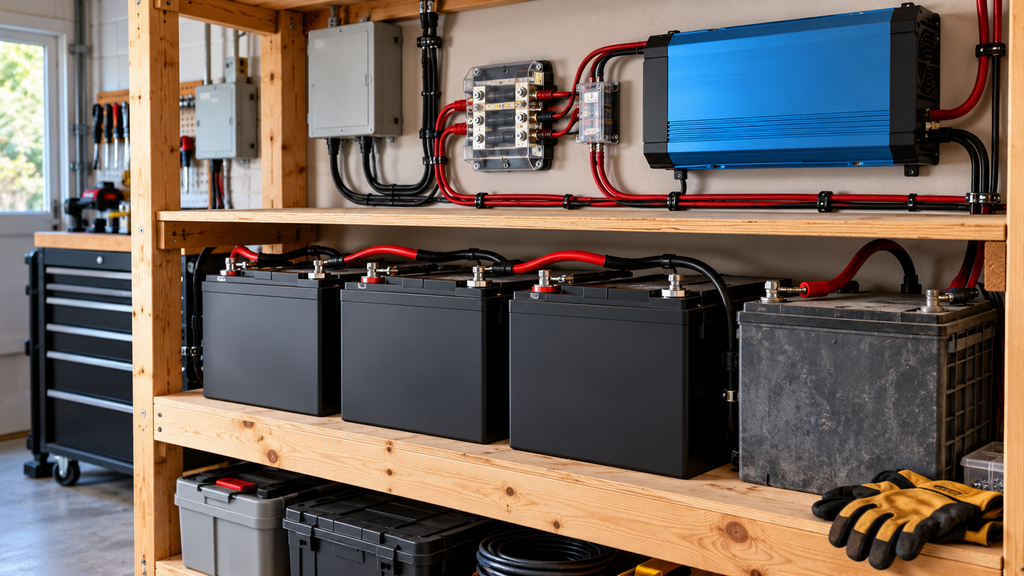
Your battery is stored readiness. Chemistry and care matter more than brand logos.
### 12V Lead-Acid (Including AGM)
Common, understood, and heavy. Do not deep-discharge them repeatedly if you want them to last — usable capacity is often treated as roughly half the nameplate for longevity. Ventilate flooded types; AGM is sealed and more forgiving for mobile use. Keep terminals clean. Charge fully after use.
### LiFePO4 (Lithium Iron Phosphate)
Lighter for the Wh you get, deeper usable discharge, longer cycle life when treated right. Needs a proper Battery Management System (BMS). Respect charge temperature limits — many chemistries do not like being charged when freezing cold. Different charge profile than lead-acid; use the right charger/controller settings.
**Safety / care (both):** Secure batteries against tip-over. Protect against short circuits (fuses close to the battery). Keep metal tools off terminals. Store and charge in a place you would accept if something went wrong — not next to your only exit in a sealed bedroom. Learn the warning signs for your chemistry (swelling, heat, smell) and stop using compromised packs.
—
## Inverter Basics
An inverter turns DC battery power into AC (household-style) power.
– **Pure sine wave** — Closest to clean grid power. Prefer this for electronics, motors with controls, and medical gear.
– **Modified sine** — Cheaper; some devices hate it (certain chargers, tools, and appliances run hot, noisy, or not at all).
– **Continuous vs surge** — Continuous rating is what it can sustain. Surge (or peak) is short bursts for motor start-up (fridge, pump, saw). Size continuous for your steady loads and surge for the worst start-up spike on that circuit.
Do not daisy-chain cheap inverters and hope. Fuse properly. Keep DC cables short and thick enough for the amperage — voltage drop on the DC side kills performance and heats wires.
—
## Vehicle / Alternator Charging
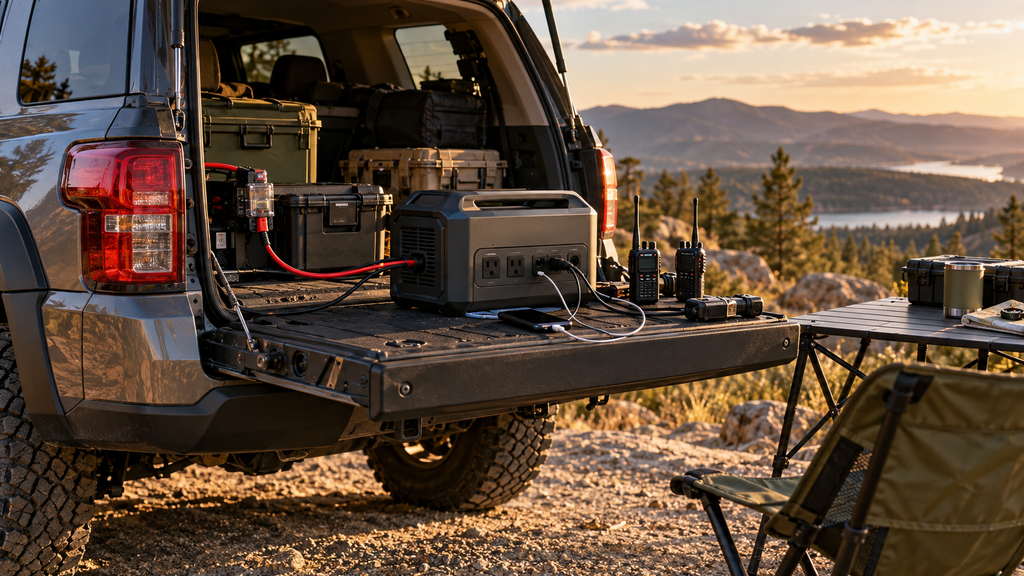
Your vehicle is a mobile power plant if you treat it that way.
– Charge power stations or 12V banks from a **cigarette / accessory socket** for modest draws, or hardwire with proper fusing for serious charging.
– Idling to charge burns fuel and is loud; use it as a bridge, not a lifestyle.
– In a **bug-out or convoy**, agree who carries spare capacity and who has solar for daytime top-off so you are not all draining the same alternators at night with headlights and radios.
– Watch for vehicles that shut off accessory power with the ignition — plan around it.
This is how you keep phones, radios, and a power station alive on the move when fixed solar is not an option.
—
## Generator as Backup
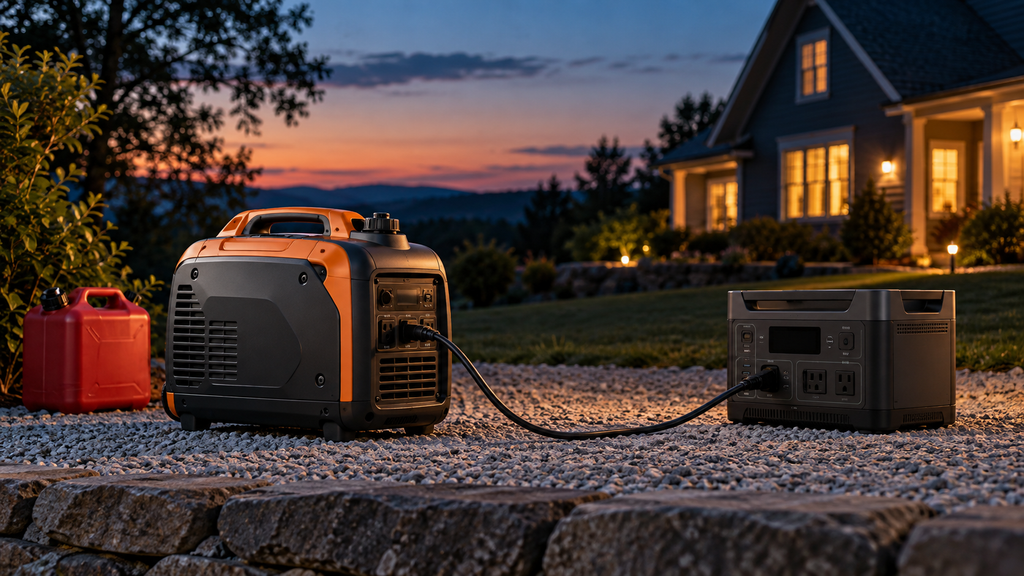
Generators buy time when sun and battery are not enough. They also create problems if you use them wrong.
– **Fuel** — Store what you will rotate and use. Stabilizer for gasoline; know local rules. Propane and diesel have their own storage and cold-weather quirks.
– **Ventilation** — Carbon monoxide kills. Run outdoors, exhaust away from windows and tents. Never in a garage “just with the door cracked.”
– **Noise** — Noise draws attention and annoys neighbors. In a long outage, that matters. Quieter inverter generators and sound discipline help.
– **Role** — Best used to refill batteries / power stations and run heavy intermittent loads, then shut down — not to idle all day if solar can cover the baseline.
Solar and batteries first where you can. Generator second.
—
## Tie-In to Radios and Comms
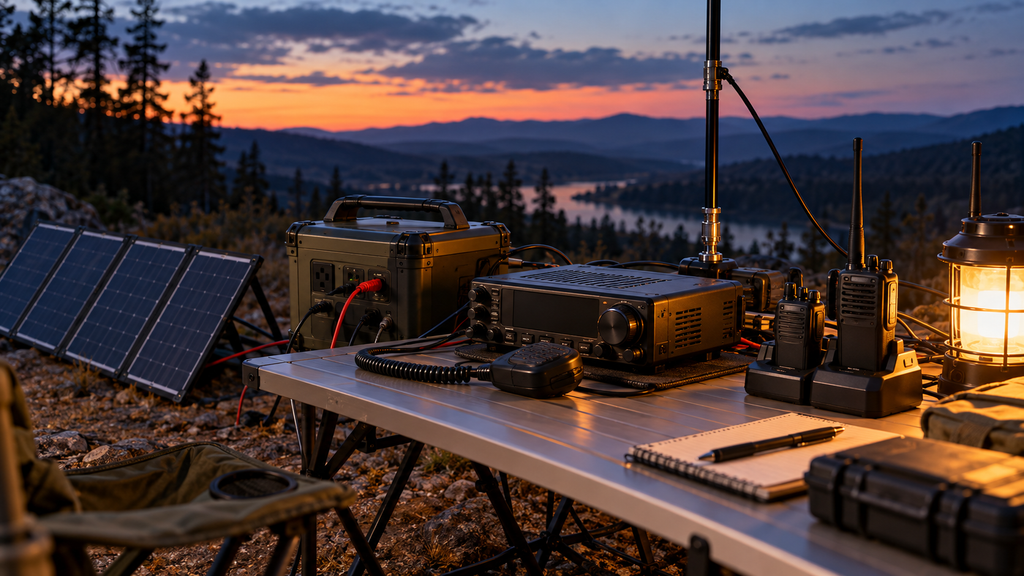
Radios without power are paperweights. Plan them into the same system.
– Many mobile and base radios are happy on **12V DC**. Feeding them from a battery bank or vehicle avoids inverter losses.
– **Duty cycle** matters — transmitting draws far more than scanning or receiving. A long-winded net can drain a small pack fast. Short, clear traffic; spare batteries or a known recharge path.
– Handhelds need charged packs and a way to top them up from solar or a power station.
– Keep antenna work Antennas and radio choice Radios tied to a power budget, not as separate hobbies. HF kits especially: power supply, battery, and solar should be part of the station checklist, not an afterthought.
If the internet and cell networks are down, radio is your lifeline — and power is what keeps that lifeline keyed up.
—
## Simple Starter Checklist
### Beginner
– [ ] Write a one-page load list (must-have devices, watts, hours/day).
– [ ] One portable power station sized to that list (Wh, not just “watts”).
– [ ] One folding solar panel that can refill a meaningful share of daily use in decent sun.
– [ ] LED lights + phone/radio charging cables that fit your station.
– [ ] Practice: unplug from the wall for an evening and live on the kit.
### Better
– [ ] Dedicated 12V battery bank (chemistry you understand) + appropriate charge controller (MPPT preferred for growth).
– [ ] Fixed or semi-permanent panel placement with weather-secure mounts.
– [ ] Pure sine inverter sized for continuous loads and fridge/pump surge if those are on the list.
– [ ] Vehicle charge cable / fused hardwire option for bug-out.
– [ ] Generator with stored fuel rotation, CO plan, and a habit of charging batteries then shutting down.
– [ ] Radio power plan: 12V feed or charged packs + solar top-off documented next to the radio kit.
– [ ] Written one-page “how we run this” for family — switches, fuse locations, what not to plug in.
—
## Keep Building
Power is a pillar next to food, water, medical, and communications. Start with what you can run this month. Expand when you know your real watt-hours — not when a brochure scares you into buying the biggest box on the shelf.
Return to Be Ready for the full readiness picture, and How To’s for Antennas, Radios, Satellite Systems, and this Solar guide.